
07377 938688
Get A Quote

AdBlue Delete

Reliable AdBlue removal service near you.

  • Certified AdBlue delete specialists in your local area
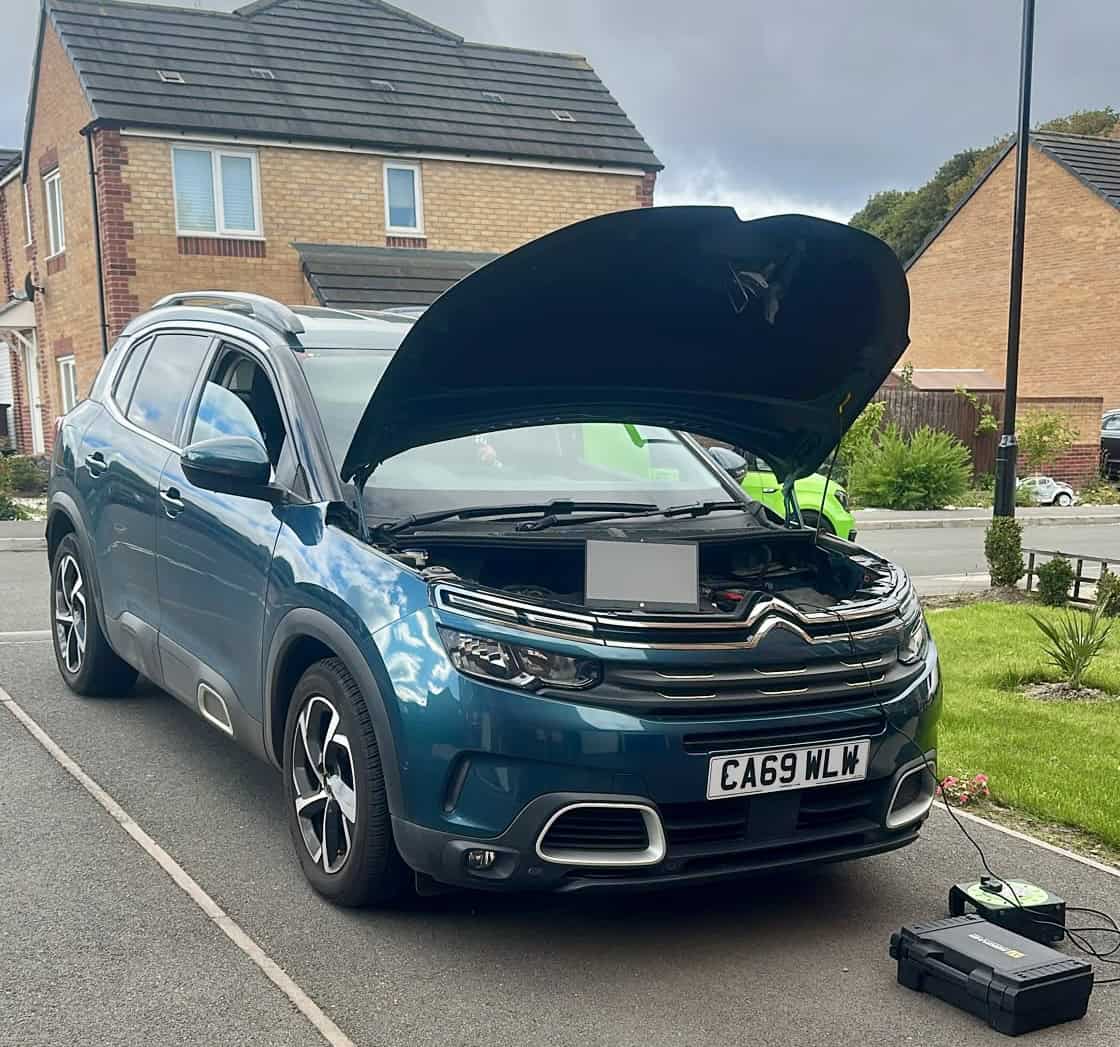
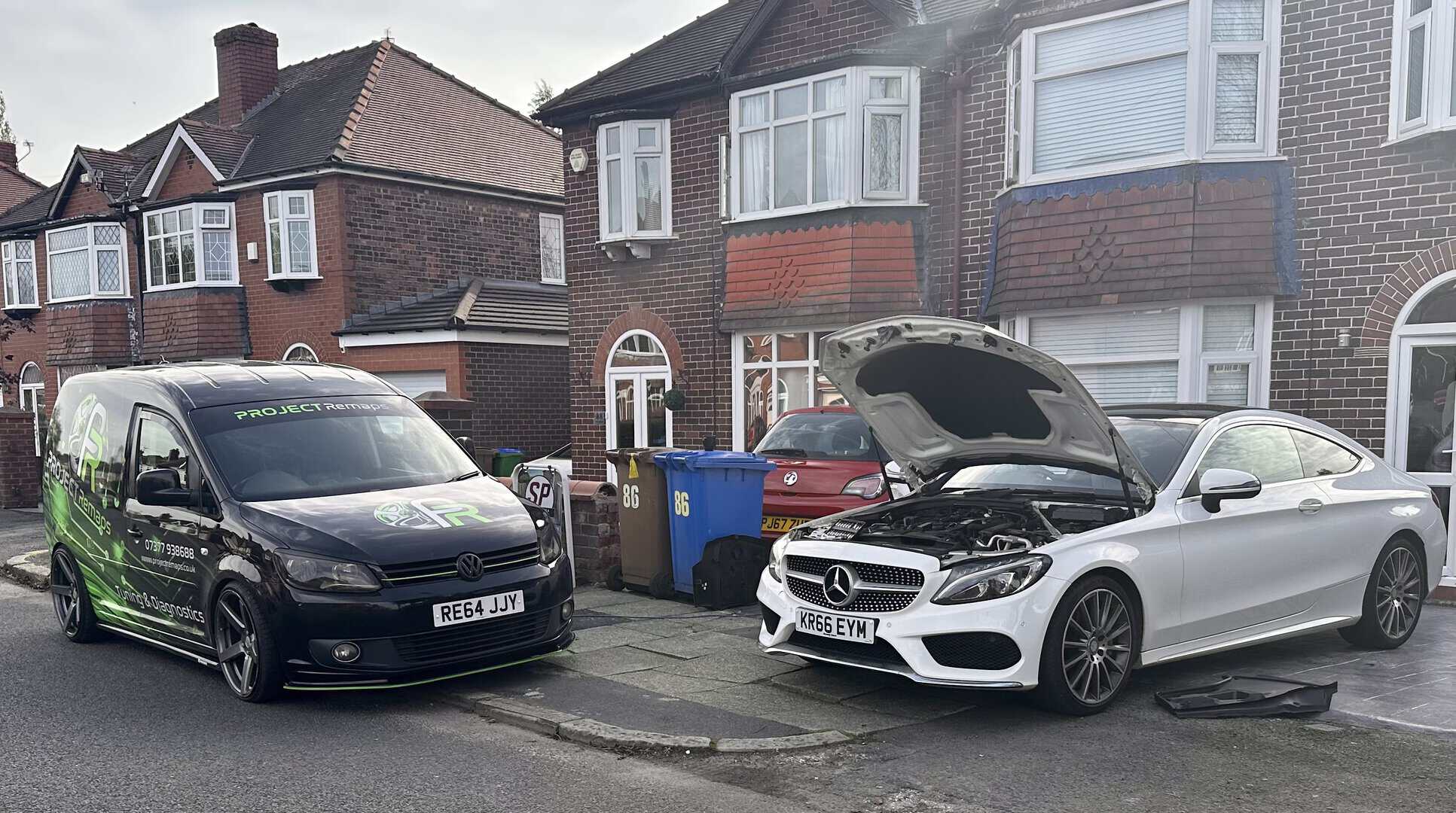
  • Mobile service - we come to you!
  • AdBlue removal with full guarantee and warranty
adblue delete
adblue delete near me

PREPARE FOR TOMORROW, TODAY

AdBlue works by means of a highly complex catalyst system with dozens of different components. If one of those components breaks, the whole AdBlue system will fall apart. This can have disastrous consequences. In the worst-case scenario, you might not be able to drive your car until it’s fixed.

To make things worse, replacing one of the many components of an AdBlue system is very expensive. Think of an AdBlue delete like having your tonsils removed – but for your car. It protects you from potential damage and keeps running costs to a bare minimum.
adblue delete uk
QUALIFIED ADBLUE REMOVAL SERVICES
At Project Remaps, we’ve been offering AdBlue delete services for more than ten years.
adblue delete cost
BEST-OF-BREED TECH
We want what’s best for your car. That’s why we only work with the latest tools and technology.
adblue delete benefits
MOBILE ADBLUE DELETE SERVICES
Too busy to come to us? Don’t worry about it – we’re always nearby, and we can come to you when it’s convenient.
adblue delete price
THOUSANDS OF SATISFIED CUSTOMERS
We have remapped cars and performed AdBlue deletes for more than 5,000 happy customers – want to be the next?

Get a quick quote for your AdBlue DELETE

Get A Price Now
quote
Latest Reviews
stars
  • "Absolutely excellent job on my Audi TT, it's a completely different car. Thanks for a superb job of work. Top rated 5 stars."
    Bill Gibbons on Facebook
  • "Just had my E400 done, very happy with the results. 
    Fantastic service and a genuinely nice guy!"
    Ben Robson on Facebook
  • "Just want to thank Joe for comming out to my place and doing stage one remapping on my van. Very very happy with the result. Very professional service and fast response. Thank you."
    Mark Kovago on Facebook
  • "Excellent service and our motorhome runs like a dream. 
    Thank you so much."
    Rachel Stowell on Facebook
  • "Had my Mercedes c180 mapped by Joe on Saturday, cracking fella and the difference in my car is unbelievable, thanks Joe"
    Mick O'shaughnessy on Facebook
  • Great company to use with friendly staff! Definitely recommend using them! Thanks Joe! A+
    Stuart Elliott on Facebook
  • Top guy great value and proper good job look no further for your remapping needs 😃
    Ian Michael Slack on Facebook
adblue removal

HOW DOES ADBLUE REMOVAL WORK?

Diesel vehicles in the UK and other European countries are fitted with an AdBlue system to reduce NOx emissions. This system only works at exceedingly high exhaust temperatures – usually over 250ºC. This means that AdBlue only kicks in during longer journeys along motorways without a lot of traffic.

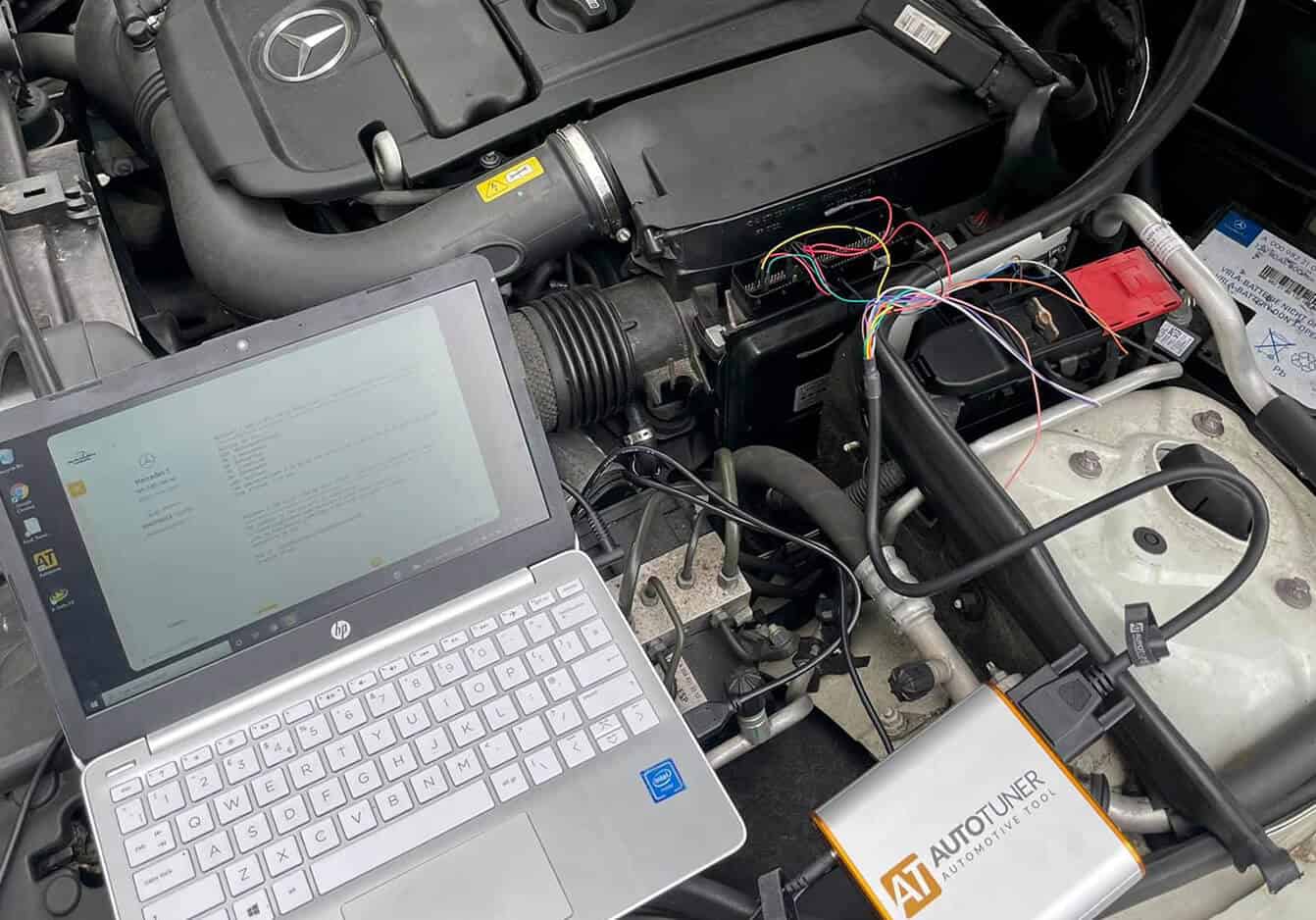
For some drivers, the cons of AdBlue outweigh the pros. And that’s where we come in. Our AdBlue removal service completely disables AdBlue by reprogramming the engine management system. This means that we can get rid of all dashboard lights and warning messages.

In most cases, AdBlue removal can be performed without need for any mechanical changes. However, some vehicles require a small electronic unit to be hardwired into their engine control memory.

request a quote
Case Studies

AdBlue Delete FAQ's

Read answers to some of the questions we are most frequently asked.

WHAT IS ADBLUE?

AdBlue is a colourless, non-toxic liquid used as a diesel exhaust fluid. It is effectively a solution of distilled (deionised) water and urea – a compound naturally found in urine. More specifically, it’s around two-thirds water and one-third urea.

Injected into a vehicle’s exhaust system, AdBlue turns nitrogen oxide into steam and nitrogen – effectively reducing emissions. In doing so, it helps meet EU emissions standards for diesel vehicles. The system is often part of Selective Catalytic Reduction (SCR) technology.

WHERE IS ADBLUE STORED IN MY VEHICLE?

AdBlue is stored in a separate reservoir from your fuel deposit. In most cases, this reservoir will be next to your fuel filler. However, some cars might have their AdBlue reservoir in the boot or under the bonnet. Larger vehicles or commercial trucks may have it installed in a separate, more hidden location. Most cars will have an indicator light to inform you when AdBlue levels are low.

CAN I LET MY ADBLUE TANK RUN OUT OF LIQUID INSTEAD OF REMOVING IT?

No. If you do this, your SCR system won’t be able to work – meaning your engine performance will be restricted. In fact, running out of AdBlue prevents the engine from working altogether in some vehicles.

If the AdBlue tank is empty, many vehicles will go into "limp mode," significantly reducing engine performance. In certain models, the engine may refuse to start until the tank is refilled. This is a safeguard to ensure compliance with emissions standards.

HOW LONG DOES ADBLUE REMOVAL TAKE?

The typical duration for an AdBlue delete can vary by vehicle make and model, but most jobs take 1-2 hours. Because Project Remaps offers mobile services, there’s no need to factor in any time to get your vehicle where it needs to be. We’ll come to a location of your choice, minimising the overall time it takes to remove your AdBlue system.

CAN I REVERSE THE ADBLUE REMOVAL IF NEEDED?

Yes – in most cases, an AdBlue delete can be reversed by reprogramming the engine management system back to its original settings. However, it’s best to discuss this with your technician before proceeding.

WHAT VEHICLES CAN HAVE ADBLUE REMOVED?

AdBlue delete services are typically available for a wide range of diesel vehicles, including cars, vans, trucks and motorhomes. Project Remaps can help with AdBlue removal for all of these vehicle types, including different makes and models, however old or new. Contact us for more details on whether your vehicle is suitable.

IS ADBLUE REMOVAL SAFE FOR MY VEHICLE?

Yes, if performed by qualified professionals using proper equipment, AdBlue removal is completely safe for your vehicle – and for you when driving it. We use cutting-edge tools and technology to ensure your engine stays in top condition without any negative side effects. Crucially, that means your vehicle can still pass its MOT after an AdBlue delete.

HOW DOES ADBLUE REMOVAL AFFECT PERFORMANCE?

With AdBlue deleted, some drivers report a noticeable improvement in engine performance, especially in heavy-duty or high-performance diesel vehicles. This is because the engine is no longer restricted by the AdBlue system.

Many drivers report better fuel efficiency after AdBlue removal, especially on longer journeys where the system’s restrictions are lifted, potentially lowering fuel consumption.

WHAT HAPPENS IF I DON'T REMOVE A FAULTY ADBLUE SYSTEM?

A faulty AdBlue system is one of the biggest reasons for AdBlue removal. If left unaddressed, it can lead to reduced engine power, warning lights on the dashboard and even prevent your car from starting.
AdBlue delete is a preventive measure to avoid these issues. It stops your vehicle being immobilised whenever there’s a problem with the AdBlue system, saving you time, money and a lot of hassle.

AdBlue Fault Codes, Warning Lights and Diagnosis

An AdBlue warning light, emissions fault or no-start countdown can mean more than a low fluid level. The message may relate to the AdBlue supply, dosing system, NOx sensors or another part of the vehicle’s emissions-control system. Understanding the complete warning is the first step towards diagnosing the cause.

Project Remaps regularly encounters the fault codes listed below. This guide explains what they can indicate, why a code alone does not identify a failed part, and what information helps with an assessment.

What does an AdBlue warning mean?

AdBlue is used by the Selective Catalytic Reduction (SCR) system to help reduce nitrogen oxides (NOx) in diesel exhaust. The system depends on the correct fluid supply, controlled dosing and information from sensors.

A low AdBlue level warning is different from a system malfunction or emissions warning. Record the exact dashboard message, any remaining distance or restart countdown, and the full diagnostic codes. The make, model, year and engine also matter when interpreting them.

Common AdBlue, SCR and NOx fault codes

These are codes we commonly see. Descriptions, suffixes and diagnostic tests can vary by manufacturer and vehicle. Always interpret the complete code with the vehicle-specific diagnostic information.

CodeWhat it indicates
P20EESCR NOx conversion efficiency below threshold.
P20E8Reductant pressure too low.
P2BADExhaust NOx excessive — reason unspecified.
P2BA9NOx exceedance associated with insufficient reductant quality.
P2BAFNOx system driver inducement active — a warning or restriction has been activated.
U029DLost communication with NOx sensor A.
U029ELost communication with NOx sensor B.
P229FNOx sensor circuit range/performance — bank 1, sensor 2.

A fault code is a starting point for diagnosis, not proof that a particular component needs replacing. Related codes, stored operating conditions and test results help establish the cause.

Why the same warning can have different causes

SCR efficiency and reductant quality faults

Codes such as P20EE, P2BAD and P2BA9 need to be considered alongside dosing performance, sensor readings and the vehicle’s operating conditions. An efficiency code does not automatically mean the catalyst has failed. A quality-related code does not, by itself, prove that the fluid is contaminated.

AdBlue pressure faults

P20E8 indicates that reductant pressure is too low. The supply system needs assessment before deciding whether a tank or pump requires replacement. Relevant checks may include leaks, deposits, pressure behaviour and dosing operation.

NOx sensor and communication faults

U029D and U029E report a communication problem. Power supply, connectors or wiring may be involved, so a lost-communication code does not automatically prove a failed sensor. P229F also requires the appropriate circuit and performance checks before a replacement is recommended.

What an AdBlue diagnostic assessment can include

  1. Record the warning: note the exact message, countdown, symptoms and whether the vehicle still starts.
  2. Scan the relevant modules: capture full fault codes, including manufacturer-specific suffixes and related faults.
  3. Review operating data: examine stored conditions and relevant live readings.
  4. Inspect relevant components: check wiring, connectors, leaks or deposits where indicated.
  5. Carry out targeted tests: assess fluid, pressure, dosing or sensor operation when the evidence calls for it.
  6. Follow the manufacturer’s diagnostic process: confirm the cause and complete the appropriate post-repair checks.

The checks required depend on the vehicle and the faults found. Replacing parts solely from a dashboard warning or a short code description can miss the underlying problem.

Will an AdBlue refill clear the warning?

A refill addresses a low fluid level. It does not necessarily resolve a separate SCR, pressure or sensor fault. Follow your vehicle handbook for the correct fluid, quantity and recognition procedure. If a malfunction warning remains, arrange diagnosis rather than repeatedly adding fluid without checking the cause.

AdBlue no-start countdowns

Some vehicles display a distance or restart countdown when the AdBlue level is low or the system detects a fault. Depending on the vehicle and warning, restarting may be restricted once the countdown expires.

Follow the dashboard instructions and vehicle handbook, and seek assistance before the countdown reaches zero. If the vehicle will not start, explain this when contacting us so the next step can be discussed.

Frequently asked questions about AdBlue faults

Can I just clear the fault code?

Clearing a code does not repair its cause. The warning may return if the system detects the same condition again. Recording the codes and diagnostic information before clearing them helps preserve useful evidence.

Does a NOx sensor code mean I need a new sensor?

Not necessarily. The complete code and vehicle-specific tests are needed to distinguish a sensor problem from a wiring, power-supply, communication or wider system issue.

Can I keep driving with an AdBlue warning?

This depends on the vehicle and the exact warning. Follow the handbook and dashboard instructions. Seek assistance for a countdown, reduced performance or a stop message; do not assume every AdBlue warning has the same urgency.

Contact Project Remaps about an AdBlue fault

To help us understand the problem, send your vehicle’s make, model, year and engine, the exact dashboard message, and any full fault codes. A clear photograph of the warning is useful. Tell us whether the vehicle starts and whether it has recently been refilled or had repairs.

Contact Project Remaps to discuss your warning and the next step, or request a quote.

pencilenvelopephone-handsetsmartphone linkedin facebook pinterest youtube rss twitter instagram facebook-blank rss-blank linkedin-blank pinterest youtube twitter instagram